Rand Water has started restricting bulk water supply to Johannesburg and Tshwane after both metros continued drawing more water than their allocations. Gauteng is the current example, but the risk of relying on municipal water is not limited to one region. Wherever a business washes vehicles using municipal supply, it depends on a system it does not control.
For vehicle wash operators, the level of exposure depends on two things: how much water the operation draws from the municipal network, and how consistently that water use is controlled.
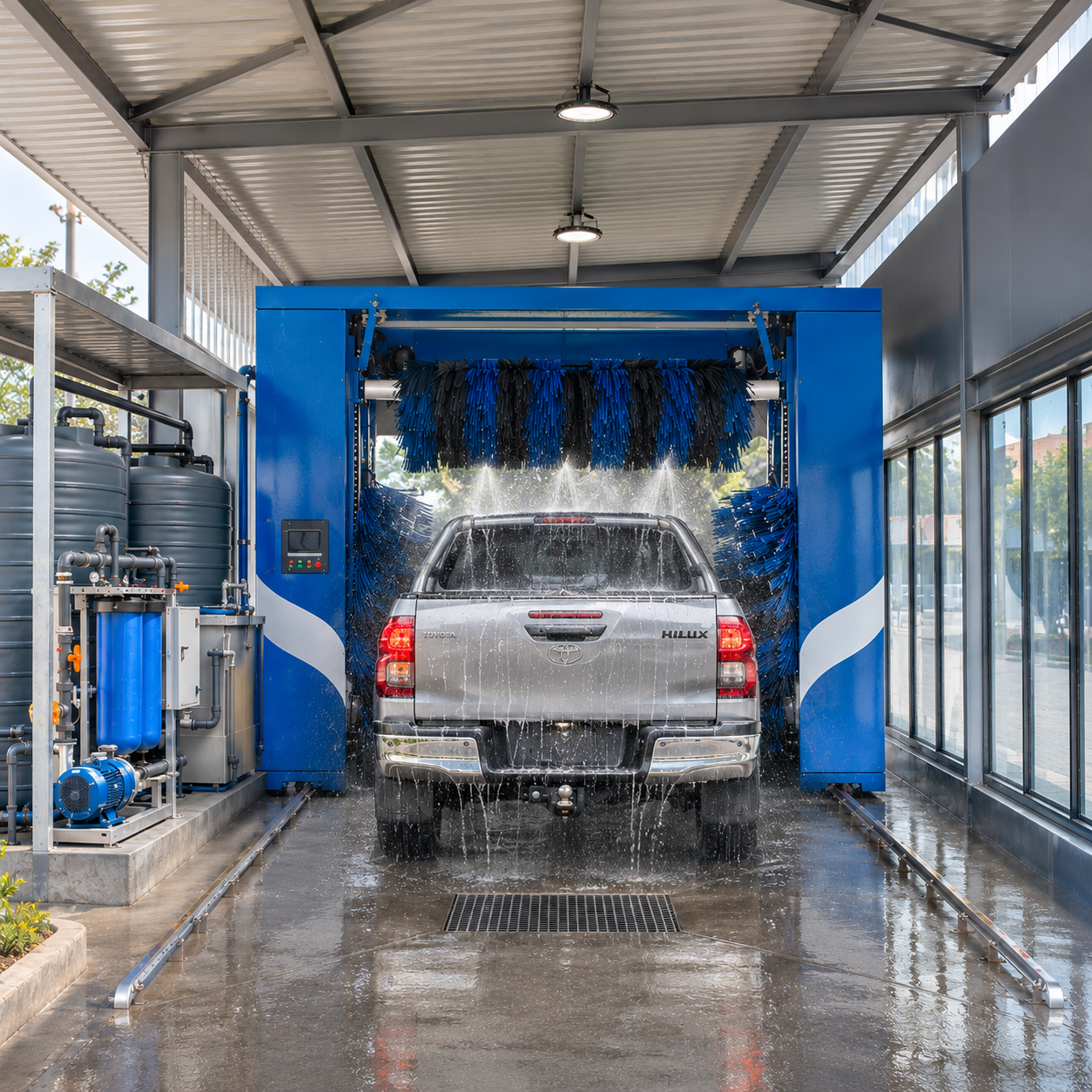
The first consideration is water demand. Automatic wash equipment with an integrated recycling system can recover, treat and reuse upwards of 80% of the water used to wash each vehicle. By reducing the amount of water drawn from the municipal network, a wash operation can reduce its dependence on that supply.
The second consideration is control over water use. In a manual wash, water continues to flow for as long as someone holds the hosepipe or pulls the high-pressure gun trigger. An automatic programme follows a defined cycle with set wash times, so water use stops when the wash is complete.
These are practical factors for any operator to understand, whether the wash bay is in Johannesburg, Cape Town or Durban. Start by finding out how much water your operation uses per vehicle, and how much of that water could be recovered and reused.
Understanding those figures can help you assess how exposed your operation is to interruptions in municipal supply—and what role water recycling equipment could play in managing that exposure.
Speak to GES about water recycling equipment, so a supply cut doesn’t leave your operation high and dry.